What Claude Code really costs to run
Updated August 2026
Two ways to pay for the model, three bills people forget, and the one number that decides which of them is cheaper for you. Current prices live on Anthropic’s own page — they move, and a table here would be out of date before you read it.
Subscription or API — the fork
Claude Code is included with the consumer Claude subscriptions, and it also runs against an API key billed per token. That is the whole choice, and it is worth making deliberately rather than by whichever you happened to set up first.
A subscription is a flat monthly fee with usage limits attached. An API key is metered: you pay for what the agent reads and writes, with no ceiling except the one you configure. The tiers and the rates both change often enough that the only sensible move is to check Anthropic’s pricing page the day you decide.
One thing that catches people out: the free Claude.ai tier does not include Claude Code. If you are evaluating it, you are choosing between a paid subscription and a metered key, not between free and paid.
What the usage limits actually mean
Subscription usage is measured in rolling windows — a short one that resets through the day, and a longer weekly one. Hit either and the agent pauses until the window resets, which is a different and much less alarming failure than a bill that keeps climbing.
The practical consequence is a rhythm, not a number: heavy days feel fine until they suddenly do not, usually in the middle of the one task you cared about. People who work this way learn to spend the expensive part of the window on the expensive part of the job.
What makes an agent expensive
Almost all of it is context. Every turn re-sends the conversation and whatever the agent has read, so cost grows with how much the agent is holding, not with how many messages you send.
Which means the levers are the boring ones. Point it at the three files that matter instead of letting it explore the repository. Start a fresh session when the subject changes rather than carrying an hour of unrelated history into it. Keep the acceptance criteria in the request — a task that is redone twice costs three times, and vagueness is what causes the redo.
The bills nobody quotes
The box. If you have moved the agent off your laptop so it keeps working, something is now running around the clock. A VPS sized properly for this — 4 GB of RAM is the honest floor, more if it drives a browser — is a real monthly line, and the cheap tiers that look tempting are the ones that fall over under a build.
Your hours. The install is an evening. Keeping it alive is the recurring one: the reboot that did not bring it back, the session that died with the SSH connection, the credential that expired in the middle of a job. Price that at whatever your hour is worth and it usually dwarfs the hosting line.
The second subscription. Self-hosted agents are bring-your-own-model. A $4 host is $4 plus whatever the agent spends thinking, and for anything genuinely useful the second number is much the larger. Compare total monthly cost, or you will pick the cheap box and be surprised by the invoice that matters.
A rule of thumb
Metered API billing wins if you use the agent in short, sharp bursts — a few focused tasks a week, each one scoped. It is genuinely cheap at that shape, and the cap you set is the only protection you need.
A subscription wins the moment you use it daily, because the thing you are really buying is the absence of a meter running while you think. People who watch a counter use the tool less, and using it less is the expensive outcome.
And if the agent needs to be awake when you are not, add the box and the hours to whichever column you were in. That is the comparison that usually surprises people — the VPS runbook is what it takes in practice, written out in full.
Where we sit, since you asked
We charge for neither of the bills above, because neither is ours to sell. Your coworkers use your company’s own Claude or ChatGPT access, and their machines run in your company’s cloud account — both billed by those providers directly. Agentic Cloud Computer is free to use; those independent provider costs can still vary by plan and workload.
The trade is that this is a team product, not a personal one, and it is set up with you rather than signed up for. Your capacity is whatever your own seats hold, which is the same meter you were already reading. If you are one person weighing a subscription against an API key, the fork above is your answer and this is not for you yet. The platform offer and the costs paid elsewhere are explained on the product page.
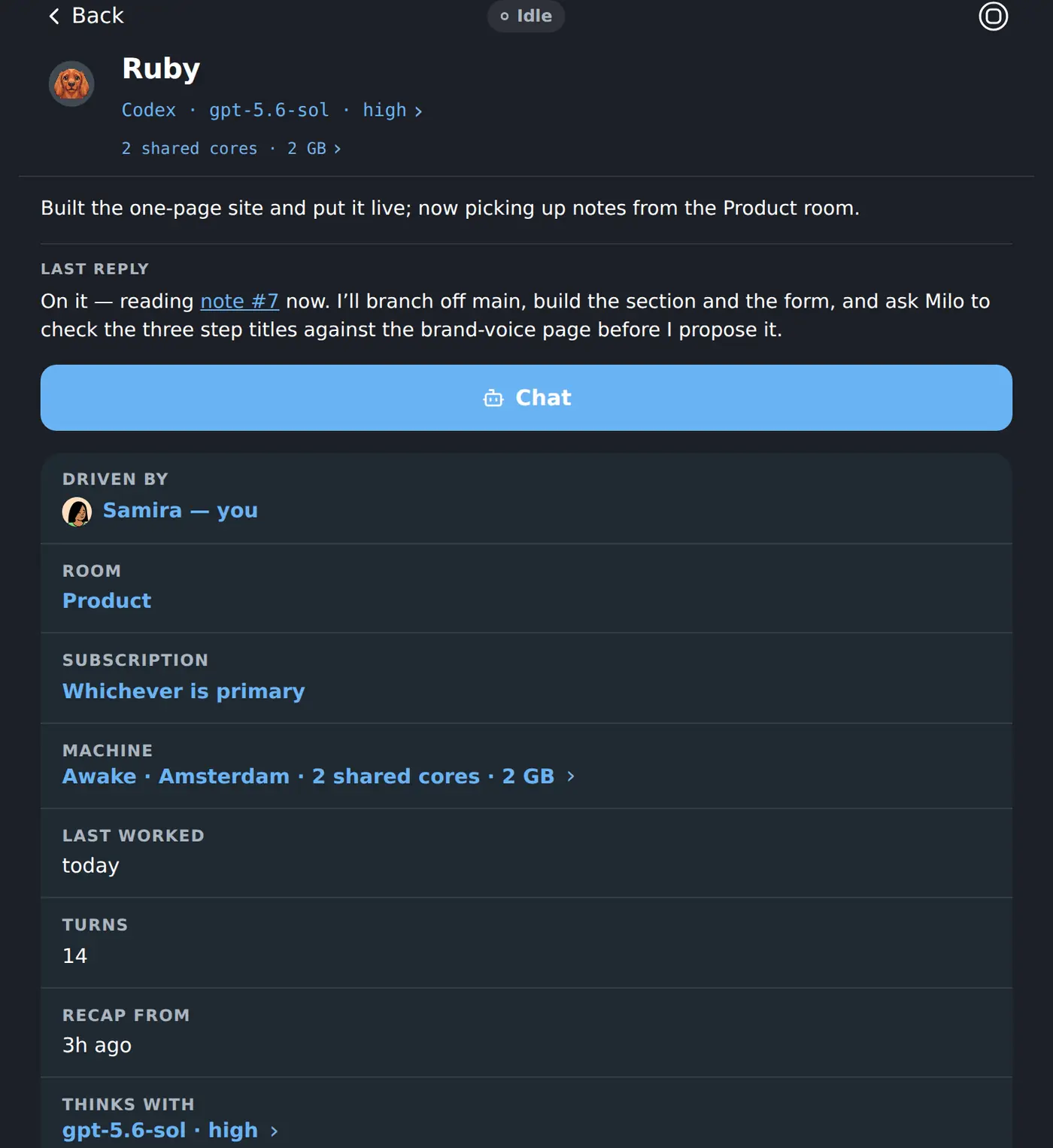
Where we sit on this fork, plainly: we do not sell you model access. Your team uses the Claude or ChatGPT access your company chooses and coworker machines run in your cloud account. Agentic Cloud Computer is free to use; provider costs still vary with the plans and workloads you choose.
Keep reading
- Where to host OpenClaw so it stays upOwn hardware, a VPS, or a managed host: what each costs once you add the model bill nobody quotes — and an honest note about which reader we are not the answer for.
- Claude Code alternatives, compared honestlySeven tools people move to and from — Codex, Cursor, Gemini CLI, OpenClaw, Aider and the rest — what each is actually good at, and the question that decides it.
- Hiring an AI engineer instead of a freelancerWhere each one wins, on the four things that decide it: what the work costs, how fast it starts, who carries the context next month, and who you can hold responsible.